


Probiotics
Why are probiotics important?
Probiotics are key drivers of health and can address a range of health concerns. Research suggests that a healthy microbiome can positively affect:

digestion (may help with gas, bloating, irregular bowel movements, etc.)

women’s health issues (e.g. vaginal and urinary tract infections)

immune health

children’s health (e.g. eczema and allergies)

mood¹

overall wellness
Probiotics and Health
Irritable Bowel Syndrome (IBS)
Probiotics have been extensively studied for digestive concerns and can be particularly helpful in managing IBS symptoms, such as abdominal pain.2

Antibiotic-Associated Diarrhea (AAD)
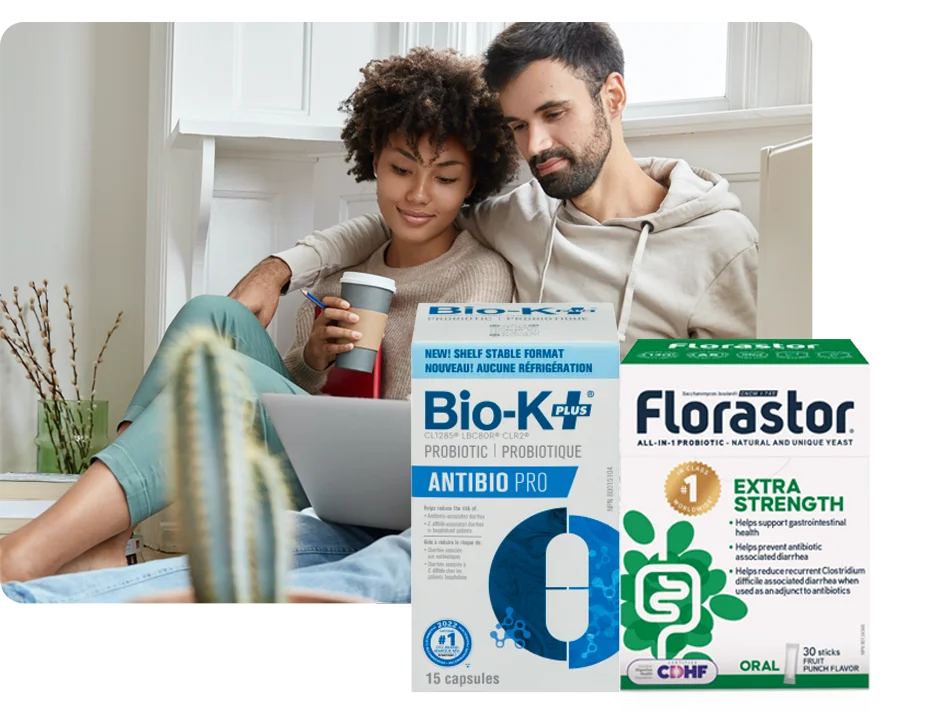
Florastor is the only probiotic supplement containing the yeast Saccharomyces boulardii CNCMI-745, a strain naturally resistant to all antibiotics. Florastor can be taken at the same time as antibiotics.
Florastor reduces the incidence of antibioticassociated diarrhea by up to 80% in children and up to 84% in adults.
Women’s Health Issues
Urinary Tract Infections
Lactobacillus strains may be helpful in women who have a history of recurrent, complicated urinary tract infections (UTIs).5
Lactobacillus acidophilus La-14® and Lacticaseibacillus rhamnosus HN001™ promote vaginal health by restoring healthy bacteria and flora.
Chaste Tree Botanical aids in relieving symptoms associated with premenstrual syndrome and menopause, including hot flashes.

Women’s Health Issues
Yeast Infections
According to Statistics Canada, 75% of women have at least one vaginal yeast infection in their lifetime, which is commonly caused by the stubborn yeast, Candida albicans.
Probiotics may be especially helpful for women with vaginal yeast-related symptoms. For women’s health concerns, select a predominantly Lactobacillus women’s formula.

Kids Health
At what age can children start taking probiotics?
Infants as young as one day old may begin taking probiotics as long as the formula is recommended for newborn infants. Taking a probiotic supplement as early as infancy may help promote a healthy balance of intestinal flora in the infant gut.
Please refer to the probiotic label for age specific recommendations.

Kids Health
What form do infant/children probiotics come in?
Probiotic formulas designed for infants and children come in different forms, such as powder or chewable tablets.
Please refer to the probiotic label for directions on how to take it.

Travel
Which probiotics are best for travelling?
Some probiotic products are shelf-stable, while others need to be refrigerated. If travelling, look for a convenient shelf-stable probiotic that does not need to be kept in the fridge. Research suggests that a probiotic strain known as Saccharomyces boulardii is the preferred probiotic for traveler’s diarrhea.

Family Health
Probiotics work in many ways to benefit our health and Culturelle® has the #1 clinically studied strain† and a proven probiotic for the whole family! Some benefits of Daily use include:
- Helps support gastrointestinal health and works all day long when used as directed
- Helps to manage acute infectious and antibiotic-associated diarrhea
- Helps to reduce risk of traveler’s diarrhea

Health & Wellness
Did you know daily probiotics consumption can play a key role in supporting immune health and help energy metabolism in the body?
Probiotics work in the gut microbiome, where 70% of your immune system is located, and they also help to maintain the body’s ability to metabolize nutrients.
Choosing the right probiotic to support you can be a bit of science, but with Culturelle® and the Lactobacillus Rhamnosus GG probiotic strain you have the most scientifically studied probiotic strain† and #1 Pharmacist Recommended Probiotic Brand†† all-in-one.

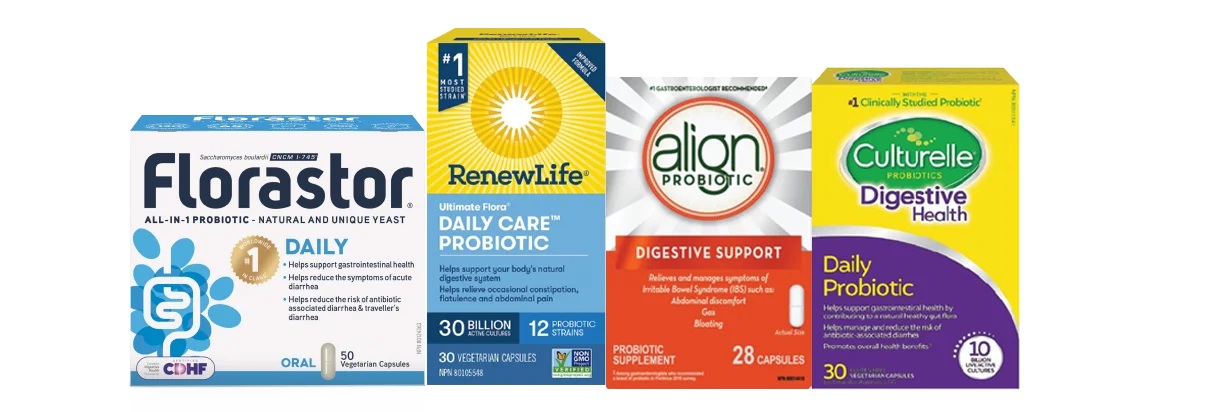
Your Fave Digestive Health & Probiotics Brands

What is Align?
A daily probiotic supplement that adds good bacteria to your gut contributing to a natural healthy intestinal flora. Available in Capsules or Chews to help relieve Irritable Bowel Syndrome symptoms or gummies to help support gastrointestinal health.
Why Align?
- Developed by gastroenterologists
- #1 doctor recommended brand for 6 years in a row‡
- Helps support gastrointestinal health
- Align Digestive Support relieves symptoms of Irritable Bowel Syndrome (IBS) such as: abdominal discomfort, gas, and bloating
Florastor, All-in-one probiotics
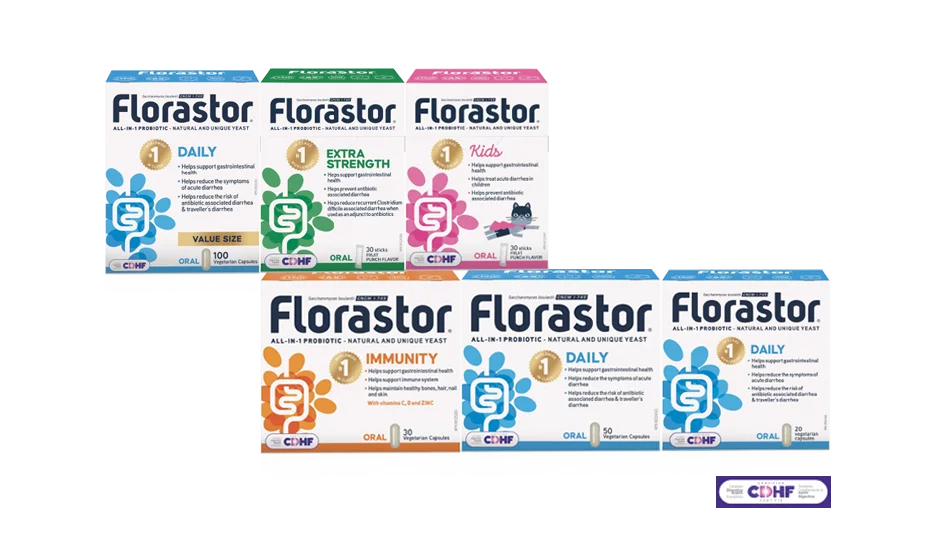
Florastor is the only yeast-based probiotic with Saccharomyces Boulardii CNCM I-745, a unique and natural strain studied in over 130 clinical trials and researched worldwide for over 65 years.
- Non GMO
- Gluten Free
- Vegetarian
- Helps treat and reduce the symptoms related to acute infectious diarrhea. the risk of antibiotic associated diarrhea(AAD) and traveller’s diarrhea
- Helps strengthen the immune system by promoting a favorable gut flora
Maintain Your Digestive Health Daily With Bio-K+
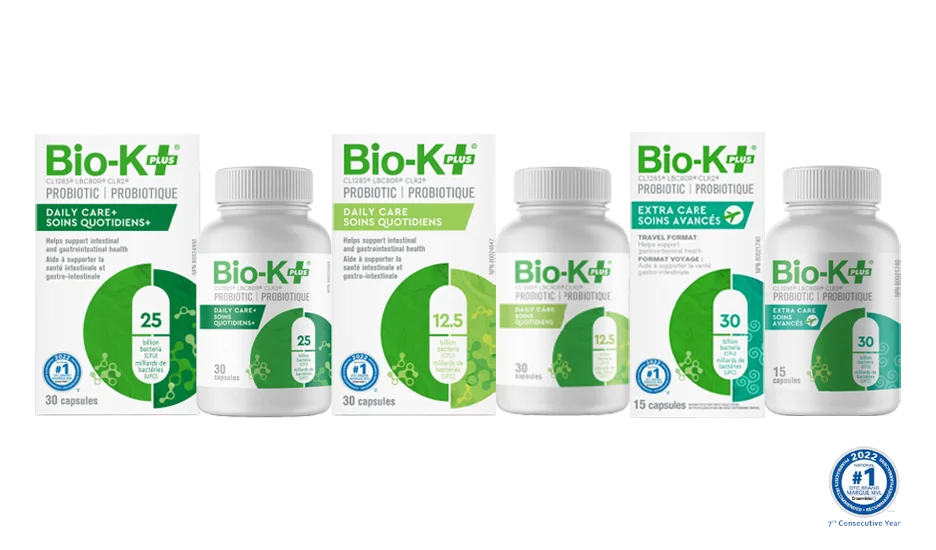
Delayed Release Probiotic Capsules To allow bacteria to survive to the intestines.
- No Refridgeration Required
- Gluten Free
- Vegan
- Helps support intestinal and gastrointestinal health
- Potency of up to 30 billion bacteria per capsule guaranteed until the expiry date
- No refrigeration required, same effectiveness
- Convenient once-daily dosage

Colace

Culturelle

Dulcolax

Gaviscon

Gravol

Hydralyte

Iberogast

IBgard

Jamieson

Renew Life
Frequently Asked Questions
How do probiotics benefit my health?
Probiotics work in many ways to benefit our health, some benefits include:
- Improve microbial balance in the intestinal tract
- Helpful in cases where beneficial bacteria have been lost, such as wih aging or antibiotic therapy
- Help to support healthy gut flora
What are some examples of probiotic-rich foods?
Live probiotics can be found naturally in a variety of foods (e.g. fermented foods). Some examples of probiotic-rich foods that can support your microbiome are:
- Yogurt
- Kefir
- Fermented vegetables (e.g. sauerkraut).
What makes supplements better than probiotic-rich foods, such as yogurt?
To encourage bacterial diversity in the gut, supplements are preferred over probiotic-rich foods such as yogurt. Multi-strain probiotics contain a variety of bacterial strains, and supplements are available in higher potencies. Additionally, exact amounts of each probiotic strain are labeled, so you know how many bacteria are delivered with each serving.
What are probiotic strains and why are they important?
Bacterial diversity in the gut is important for digestive wellness. Lactobacillus strains: Most prevalent probiotic bacteria in the small intestine. Bifidobacterium strains: Mostly found in the large intestine or colon. For optimal health, both Lactobacillus strains and Bifidobacterium strains are needed.
What does 50 billion mean? How many active cultures (CFUs) are in a probiotic?
The culture count of probiotics is labelled in CFUs or Colony Forming Units. This refers to the total number of bacteria per serving. When a probiotic states 50 billion CFU, this means an estimate of 50 billion active bacterial colonies are in each serving.
How do I choose the right potency for me?
When choosing a probiotic, it is important to consider your individual health goals and needs.
Higher potency probiotics (e.g. 100 billion): Typically recommended for chronic health issues or following a course of antibiotics.
Lower potency probiotics: Often used for daily maintenance in healthy individuals.
How long should I take a probiotic for?
While many people discontinue using a probiotic once their symptoms subside, probiotics are generally considered safe and can be taken daily, much like a multivitamin.
Please consult your healthcare practitioner for specific recommendations.
Why do the number of bacterial strains matter?
The number of bacterial strains is important because diversity in the gut matters. A multi-strain probiotic formula introduces a variety of strains (both Lactobacillus and Bifidobacterium strains) to the digestive tract.
Saccharomyces boulardii CNCM I-745 is a unique probiotic strain naturally resistant to any tested antibiotics.
Why do probiotic strains matter?
While all probiotics offer health benefits, certain probiotic strains have been clinically studied and are indicated for certain conditions, such as antibiotic-associated diarrhea, traveler’s diarrhea, and irritable bowel syndrome (IBS).
What time of day should I take probiotics?
Florastor can be taken at the same time as antibiotics, as it contains Saccharomyces boulardii CNCMI-745, a strain naturally resistant to all antibiotics.
Please refer to the directions on the label.
Can probiotics be taken with other vitamins and medication?
Yes, probiotics can be taken with other vitamins and medication. If you are on antibiotics and/or antifungals, take your probiotic at least 2-3 hours before or after.
If you are taking medication, consult your health care practitioner prior to use.
Which probiotics are most effective for alleviating weekly abdominal pain?
Higher amounts of Bifidobacterium per capsule can alleviate weekly abdominal discomfort.
Products with 5x more Bifidobacterium specifically target and offer relief for individuals experiencing weekly abdominal discomfort.
References:
Messaoudi M et al. Beneficial psychological effects of a probiotic formulation (Lactobacillus helveticus R0052 and Bifidobacterium longum R0175) in healthy human volunteers. Gut Microbes. July 2011;2(4):256-261.
Harper A et al. The Role of Bacteria, Probiotics and Diet in Irritable Bowel Syndrome. Foods. Feb 2018;7(2):13.
Francino MP. Antibiotics and the Human Gut Microbiome: Dysbioses and Accumulation of Resistances. Frontiers in Microbiology. Jan 2016;6:1543.
Waller PA et al. Dose-response effect of Biofidobacterium lactis HN019 on whole gut transit time and functional gastrointestinal symptoms in adults. Scandinavian Journal of Gastroenterology. 2011 Sep;46(9):1057-1064.
Gupta, V et al. Recurrent urinary tract infections in women: How promising is the use of probiotics? Indian Journal of Medical Microbiology. July-Sep 2017;35(3):347–354
Kelesidis and Pothoulakis (2012) Efficacy and safety of the probiotic Saccharomyces boulardii for the prevention and therapy of gastrointestinal disorders. Therap Adv Gastroenterol 5(2):111-25.
« A meta-analysis of 12 RCTs of various probiotics (including S. boulardii) for the prevention of traveler’s diarrhea found a significant reduction in the risk of traveler’s diarrhea when probiotics are used" (McFarland, 2007)
McFarland, L.V. (2007) Meta-analysis of probiotics for the prevention of traveler’s diarrhea. Travel Med Infect Dis 5: 97–105.
Disclaimer:
THIS PAGE IS NOT INTENDED FOR THE PURPOSE OF PROVIDING MEDICAL ADVICE.
This page is for information purposes only. This page does not provide specific medical advice and is not a substitute for professional medical advice, diagnosis or treatment. Always seek the advice of your physician or other qualified health care provider with any questions you may have regarding a medical condition or treatment and before undertaking a new health care regimen, and never disregard professional medical advice or delay in seeking it because of something you have read in this page. Reliance on any information in this page is at your sole risk, and neither Clorox nor Rexall is responsible or liable for any information, products or resources that you obtain through this booklet.